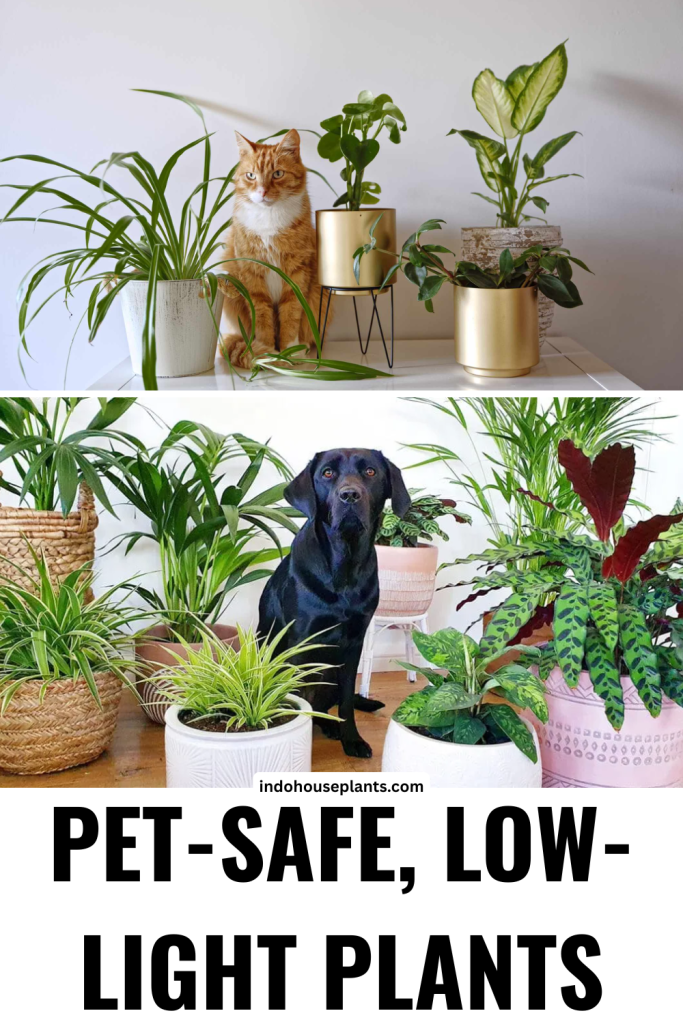
Living with pets and plants can feel impossible—especially after one midnight panic at the vet. But you really can have a green, happy home without risking your cat or dog’s health. Here’s what I wish I’d known when I first brought home my “pet-safe” jungle (spoiler: not all of it was actually safe).
The Truly Safe Indoor Plant List for Pets
Here are plants I trust around my own animals, with the scientific names you’ll want to double-check (since common names are often misleading):
- Spider Plant (Chlorophytum comosum)
Tough, forgiving, and only mildly interesting to most pets. If they nibble, it’s not harmful. - Boston Fern (Nephrolepis exaltata)
Lush, classic, and safe—even if it ends up as a wrestling victim. - Parlor Palm (Chamaedorea elegans)
A palm that’s actually pet-safe! My dog and cats have tested it (with their teeth, unfortunately). - Calathea & Prayer Plant (Calathea spp., Maranta leuconeura)
Beautiful leaves that move at night. Fun to watch, safe if nibbled. - Ponytail Palm (Beaucarnea recurvata)
Not a true palm—totally harmless, and the weird leaves usually get ignored. - African Violet (Saintpaulia)
A rare safe flowering option for bright windowsills. - Haworthia (a small, pointy succulent)
Unlike aloe (which is toxic), Haworthias are totally non-toxic and great for windowsills. - Baby Tears (Soleirolia soleirolii)
Delicate, trailing, and safe for pets. - Areca Palm (Dypsis lutescens)
Sometimes called butterfly palm; NOT the same as sago palm (which is deadly). Areca is safe. - Peperomia (many varieties)
Looks like a little rubber plant—totally safe.
Quick tip: There are more safe options, but these are easy to find and reliable. When in doubt, always check the scientific name.
How to Quickly Tell if a Plant is Safe for Pets
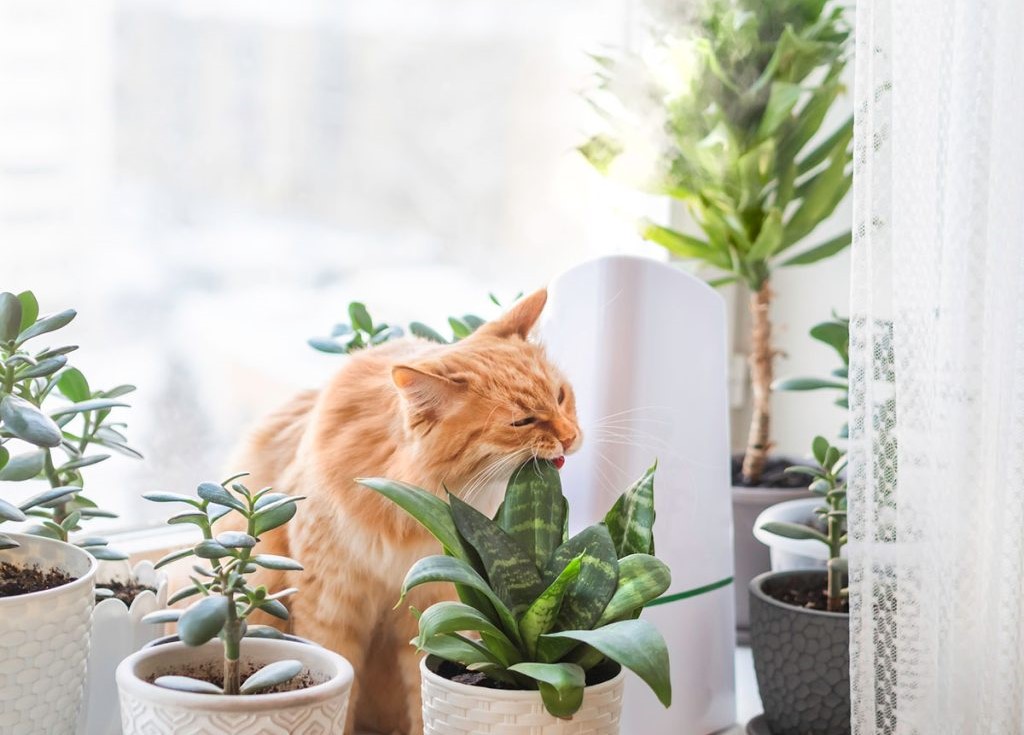
Don’t trust labels at the store—they’re often wrong or too vague. Here’s a foolproof system I use every single time:
- Find the scientific (Latin) name
- If it’s not on the tag, look it up with a free app (“PictureThis” or “PlantSnap” are great).
- Compare photos online to be sure.
- Check the ASPCA’s Plant List
- The ASPCA Plant List is the gold standard.
- Save it as a shortcut on your phone. I do!
- Never rely on “pet safe” marketing
- Only trust what you can confirm with the scientific name.
- Can’t confirm? Skip the plant or keep it out of reach
- Peace of mind is worth more than any pretty leaf.
What to Watch Out For
- Lilies: All types are highly toxic to cats (and many to dogs)—even a tiny amount can be life-threatening.
- Sago Palm: Looks tropical, but one bite can kill a pet.
- Asparagus Fern: NOT a true fern, and very irritating to pets.
- Aloe Vera, Pothos, Fiddle Leaf Fig, Monstera, Snake Plant: Super popular, but all toxic to pets if chewed.
Even safe plants can cause upset tummies if your pet eats a lot—think vomiting or diarrhea. Usually mild, but watch for ongoing issues.
What If My Pet Eats a Plant?
- Stay calm.
- Identify the plant—grab a leaf or take a photo.
- Double-check the ASPCA list.
- Call your vet or Animal Poison Control (888-426-4435) if the plant is dangerous or your pet is acting ill.
- Bring the plant or a photo to the vet if you need to go in.
Tips for a Pet- and Plant-Friendly Home

- Start with 2–3 verified safe plants.
Learn how your pets react—some ignore plants, some think they’re snacks. - Label every plant with its scientific name.
Masking tape works! If you ever need a pet sitter, this is a lifesaver. - Hang plants or use shelves for “safe zones.”
Baskets and high shelves can keep tempting leaves out of reach. - If your pet is a serial chewer:
- Use citrus sprays or deterrent sprays on leaves (test on a leaf first).
- Offer safe cat grass (Dactylis glomerata) as a distraction.
- Redirect with toys or treats when they show interest in plants.
- Share your plant list with friends and family.
I text my safe-plant list to my sister every time she redecorates.
Quick-Reference Checklist
- [ ] Find the scientific name.
- [ ] Check the ASPCA Plant List.
- [ ] Double-check with a plant ID app if unsure.
- [ ] Label your plants at home.
- [ ] If in doubt, keep the plant away—or skip it entirely.
You absolutely can create a home full of both happy pets and gorgeous plants. All it takes is a couple of extra minutes to double-check names, and a little creativity with placement. Trust yourself—you’re already ahead of the game just by asking!
Green leaves and wagging tails? 100% possible.